Urban & Cultural Planning Projects
Selected projects where I worked with different teams to make a real impact
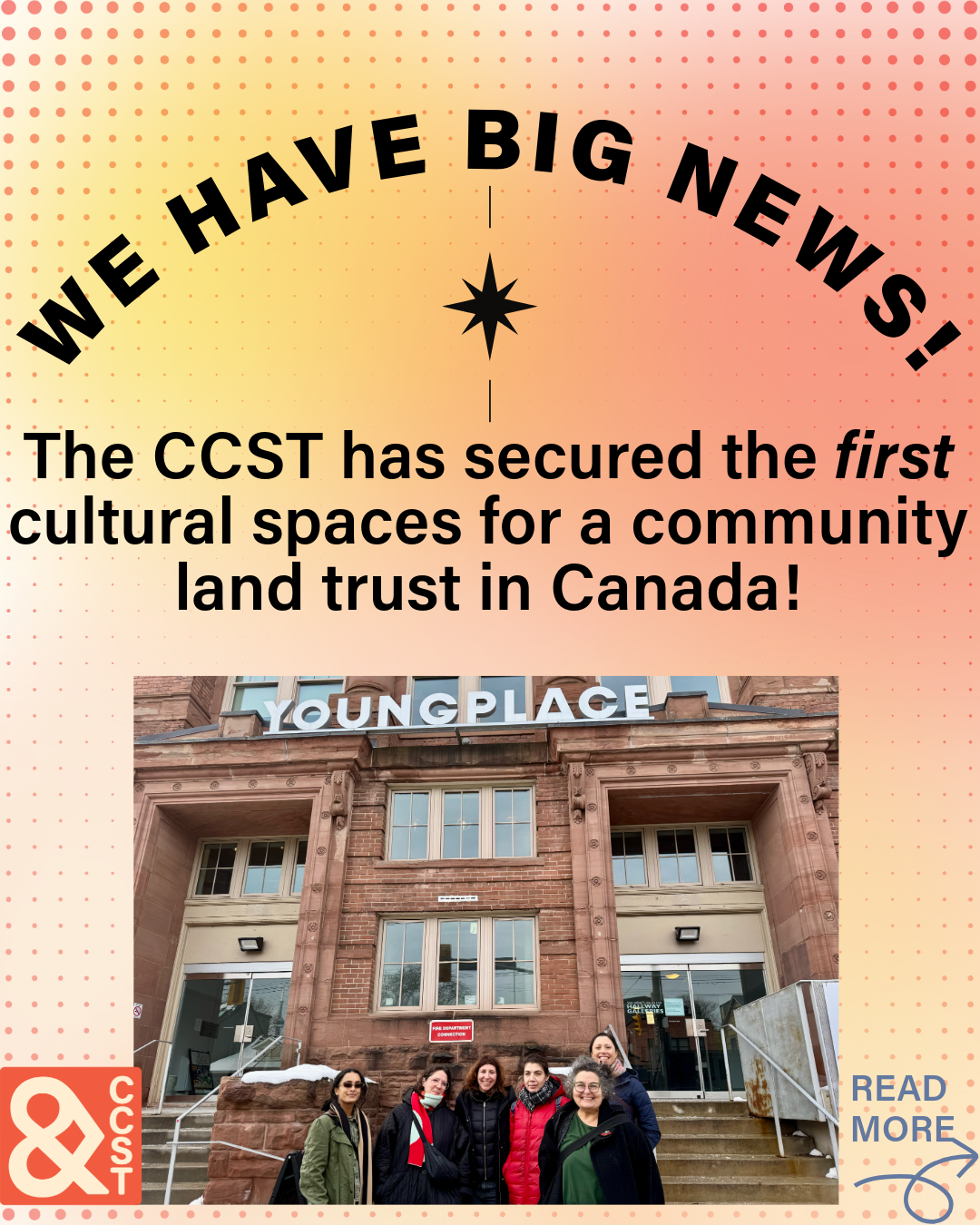
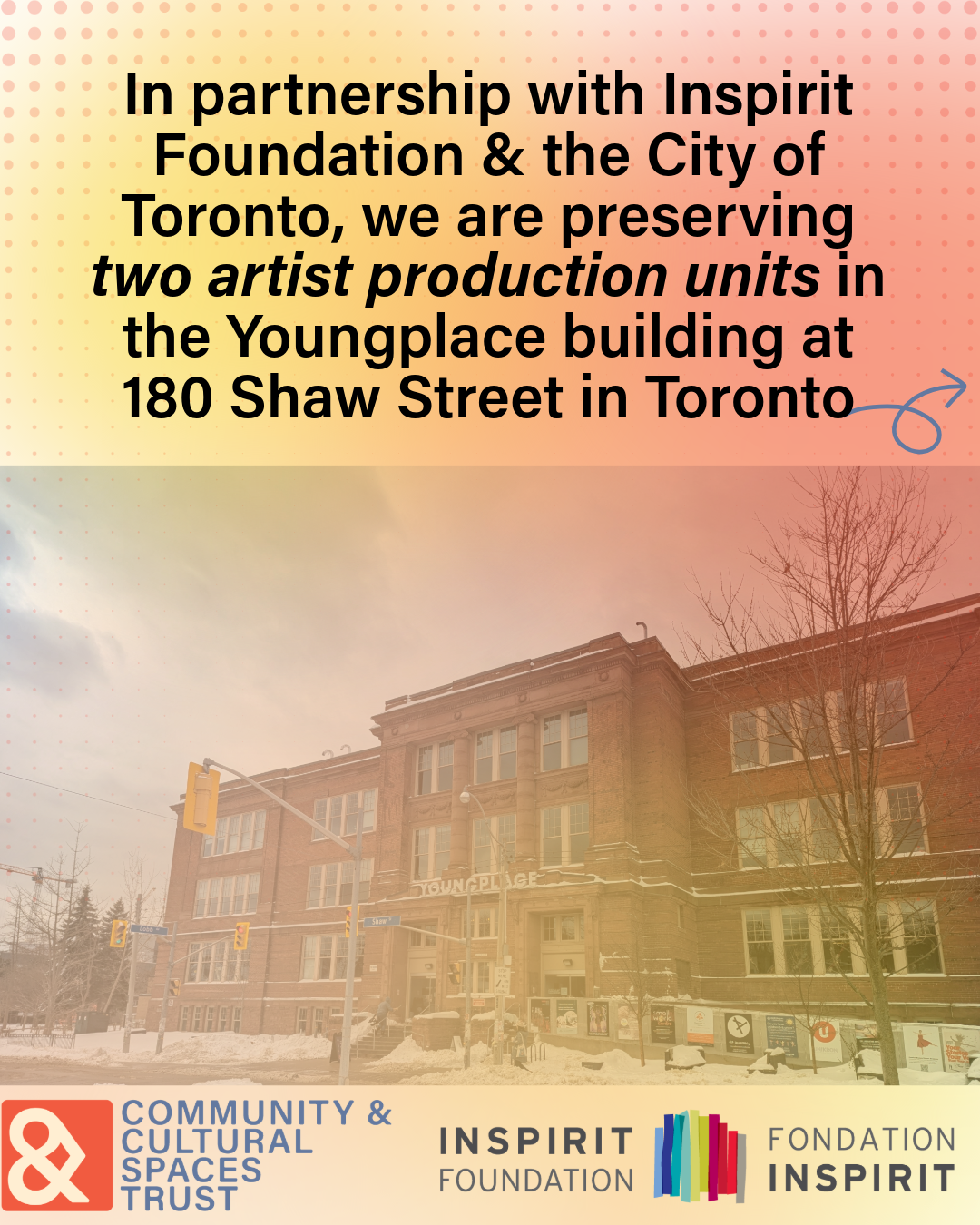
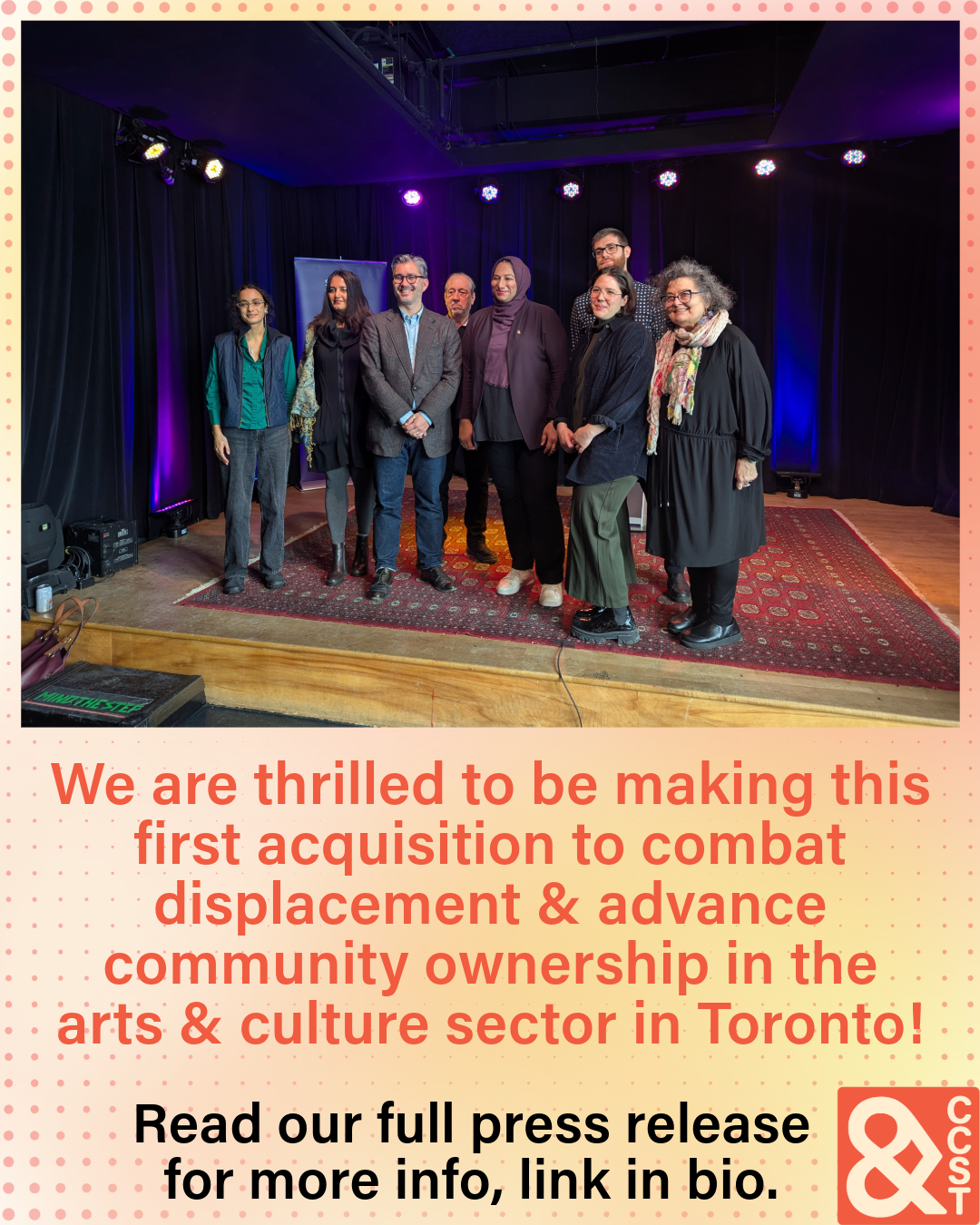
Community & Cultural Spaces Trust: Network Mobilization Lead (2023-25)
My Roles: I joined the CCST Advisory Committee in 2023 and was appointed Board Director and Network Mobilization Lead in 2024. I volunteered providing strategy, engagement, knowledge and network mobilization expertise.
Cultural Policy Hub (2024)
In my previous role as Policy Advisor at the Cultural Policy Hub at OCAD U, I was one of two full-time staff, taking on a broad range of responsibilities for a new hub at the university, including formal process setup, research and policy analysis, partnership building, community and stakeholder engagement, and event planning and design. Find ~30 outputs (reports, briefs, blogs, event recordings, past events) completed with my leadership and help in the Linktree summary, and some key highlights:
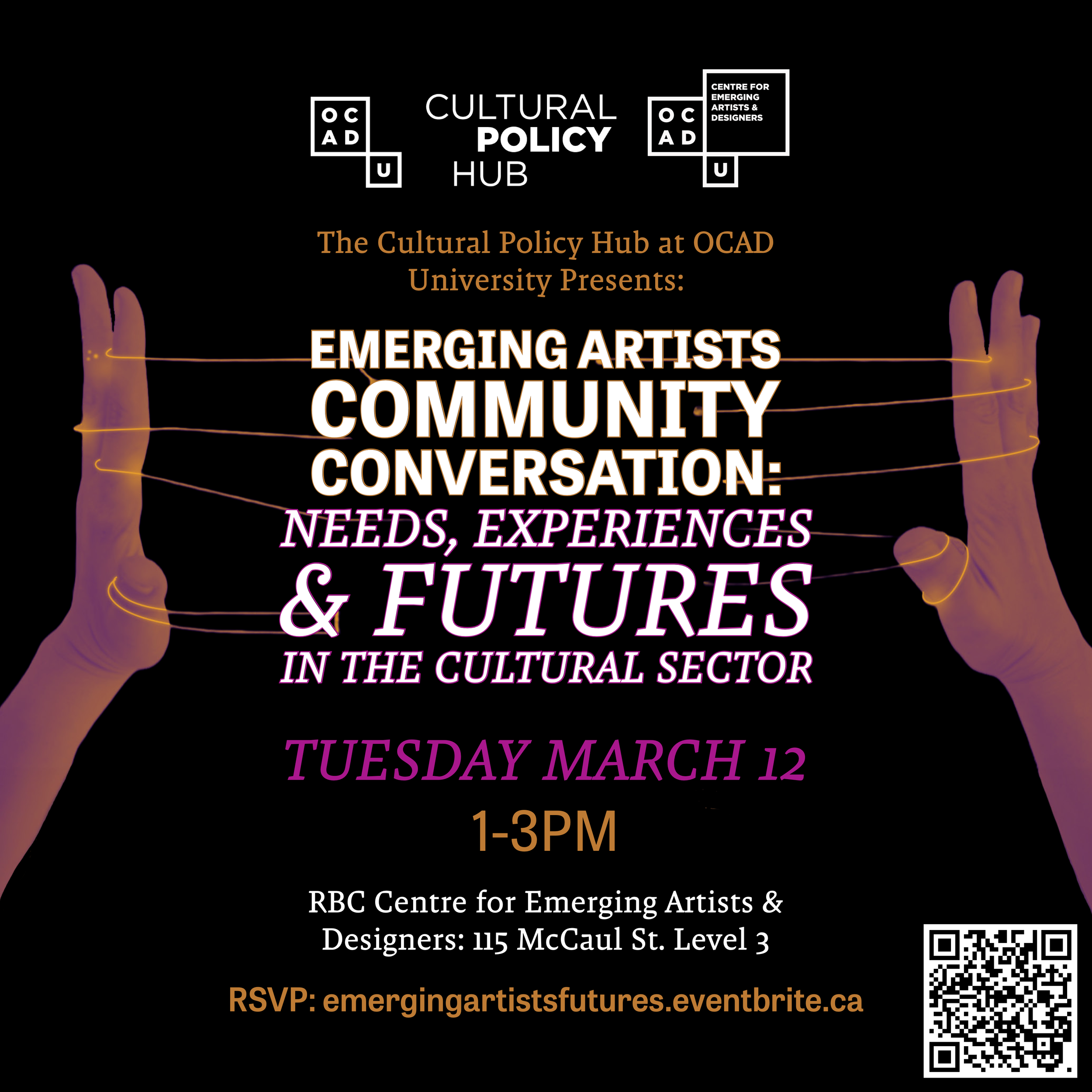
Emerging artists community conversation.
Led complete event, summary report, and policy recommendations; used as an input into the City of Toronto’s Culture Action Plan & Monumental Project’s Engagement Summary.Report: Cultural Spaces in Practice: Re-thinking Policy & Imagining Future Uses. Developed & edited the report; Advice from Kelly Whilem & Bridget MacIntosh.
Scene-setter | Cultural Spaces in Practice: Re-thinking Policy & Imagining Future Uses. Developed & edited the scene-setter; Advice from Kelly Whilem.
Precarity & Sustainability: data project.
Developed preliminary research, a comprehensive evaluation of CADAC’s financial and statistical data of over 1,800 core-funded arts organizations, and visualizations. Later used for the creation of ‘Data Narratives and Organizational Financial Precarity in Canada’s Arts, Culture and Heritage Sector’ Report.Report: Policy Roundtable on Generative AI. Developed scene setter and edited report.


Parkdale People’s Economy’s Parkdale Community planning Study (2024)
In this report: The 2024 Parkdale Community Planning Study sets into motion a community plan for Parkdale created through sustained community-led visioning, strategizing, and organizing. The community plan dreams of a future where the people of Parkdale can unite and build collective power for transformative change that centres community wellbeing and justice.
Client: Parkdale People’s Economy; project brief prepared by Miru Yogarajah
Team Members: Alycia Shanika Doering, Angela Koh, Ariella Jordyn Barmash, Brooke Sutherland, Emma Clayton Jones, Hima Batavia, Mary Margaret Gelinas, Mercedes Sharpe Zayas, Miru Yogarajah, T Williams, Tsomo Chime
My Role: Co-authored the Social Infrastructure section with Ariella Jordyn Barmash & developed a basic template for the report design
Community Land Trusts:
Holding Space for Racial Justice (2023)
My work: Conducted primary research by working to build trust & interview representatives from Toronto, ON: Little Jamaica CLT, Chinatown CLT, Vancouver, BC: Hogan's Alley CLT, Nova Scotia: Upper Hammonds Plains CLT, Down the Marsh CLT, Weymouth Falls CLT
Synthesized conversations into a profile piece offering a snapshot in time of how racialized stewards and knowledge holders are planting seeds of change with community land trusts (CLTs)
Client: Canadian Network of Community Land Trusts (CNCLT)
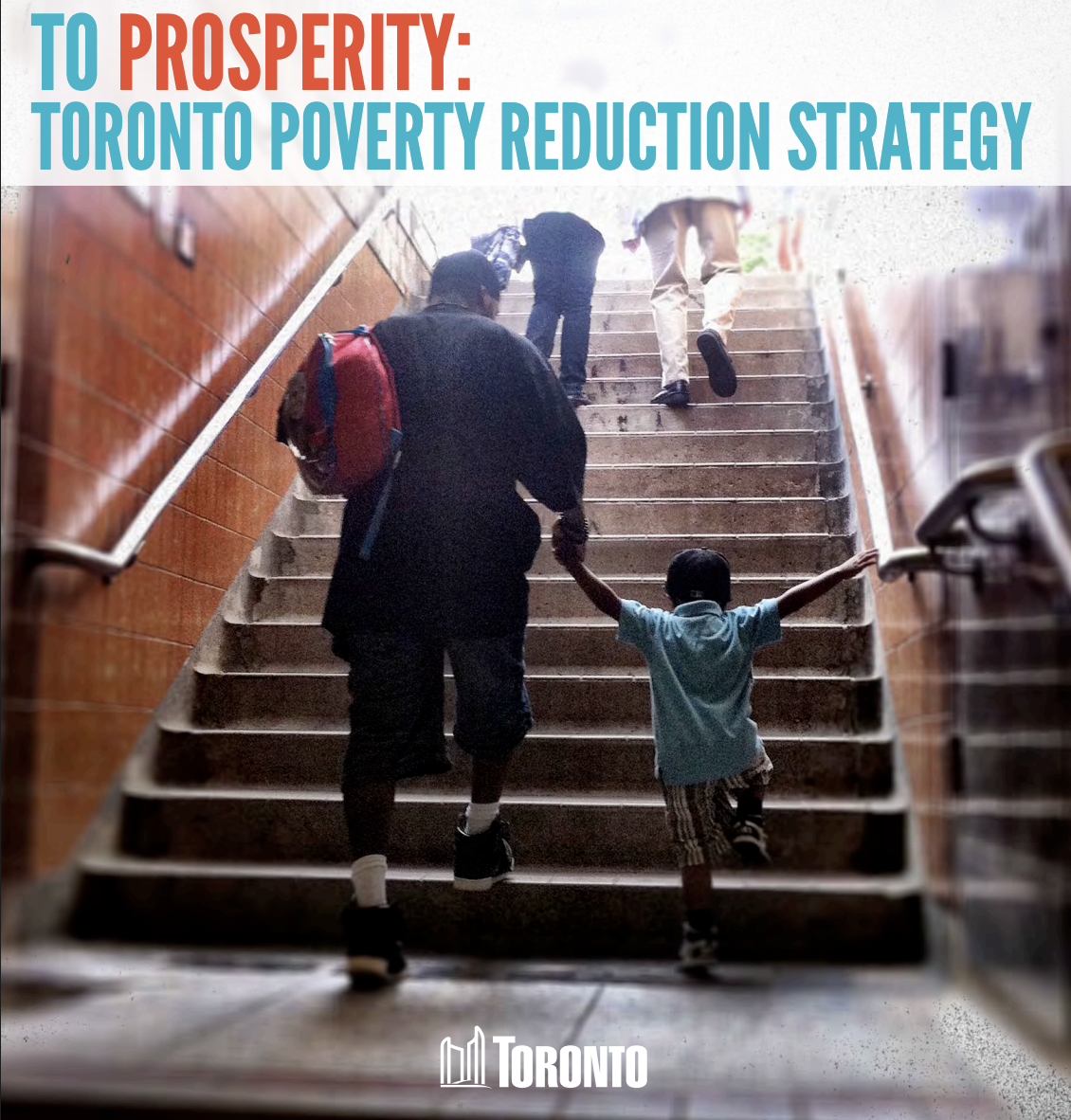
Environmental Scan for the City of Toronto’s Poverty Reduction Strategy (2022)
In the environmental scan: Available research around efforts of Toronto resident leaders, grassroots groups, organizing and movement networks, and social service agencies to identify and reduce poverty within the City of Toronto. The scan primarily looks at findings from 2018-2022, with an emphasis on issues that have been highlighted due to and following the COVID-19 pandemic.
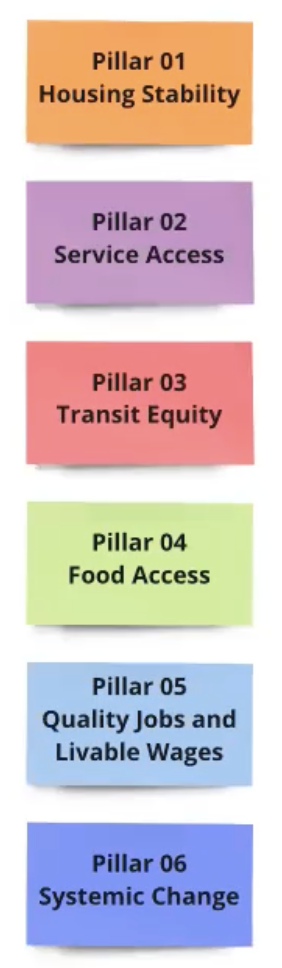
The scan was framed in relation to the City of Toronto’s Poverty Reduction Strategy’s 3rd Term Action Plan and the 6 Poverty Reduction pillars:
1) Housing Stability, 2) Service Access, 3) Transit Equity, 4) Food Access, 5) Quality Jobs and Livable Wages, and 6) Systemic Change.
This environmental scan may be shared upon request.
Client: The City of Toronto’s Poverty Reduction Office
Team Members: Alycia Shanika Doering, Madeline Chambers & Richmond Uy
My Role: In my previous role as Urban Planner at CP Planning, I led the development of the environmental scan summary report, co-developed the project plan for our work as engagement partners, and managed communications with members of the PRSO team, and the community advisory committee.
Spatial Justice Strategy for
toronto NonProfit Network (2022)
In this report: The crafted forward-thinking Spatial Justice Strategy outlines 21 actions across 10 objectives, underpinned by 3 goals, all aimed at enhancing spatial justice in our communities.
Client: The Toronto Non-profit Network, who represents over 400 nonprofit organizations in Toronto, and is dedicated to creating thriving spaces for nonprofits and communities.
Team Members: Alycia (Shanika) Doering, Cheryll Case, as part of CP Planning
My Roles: Research, analysis, reporting, & design
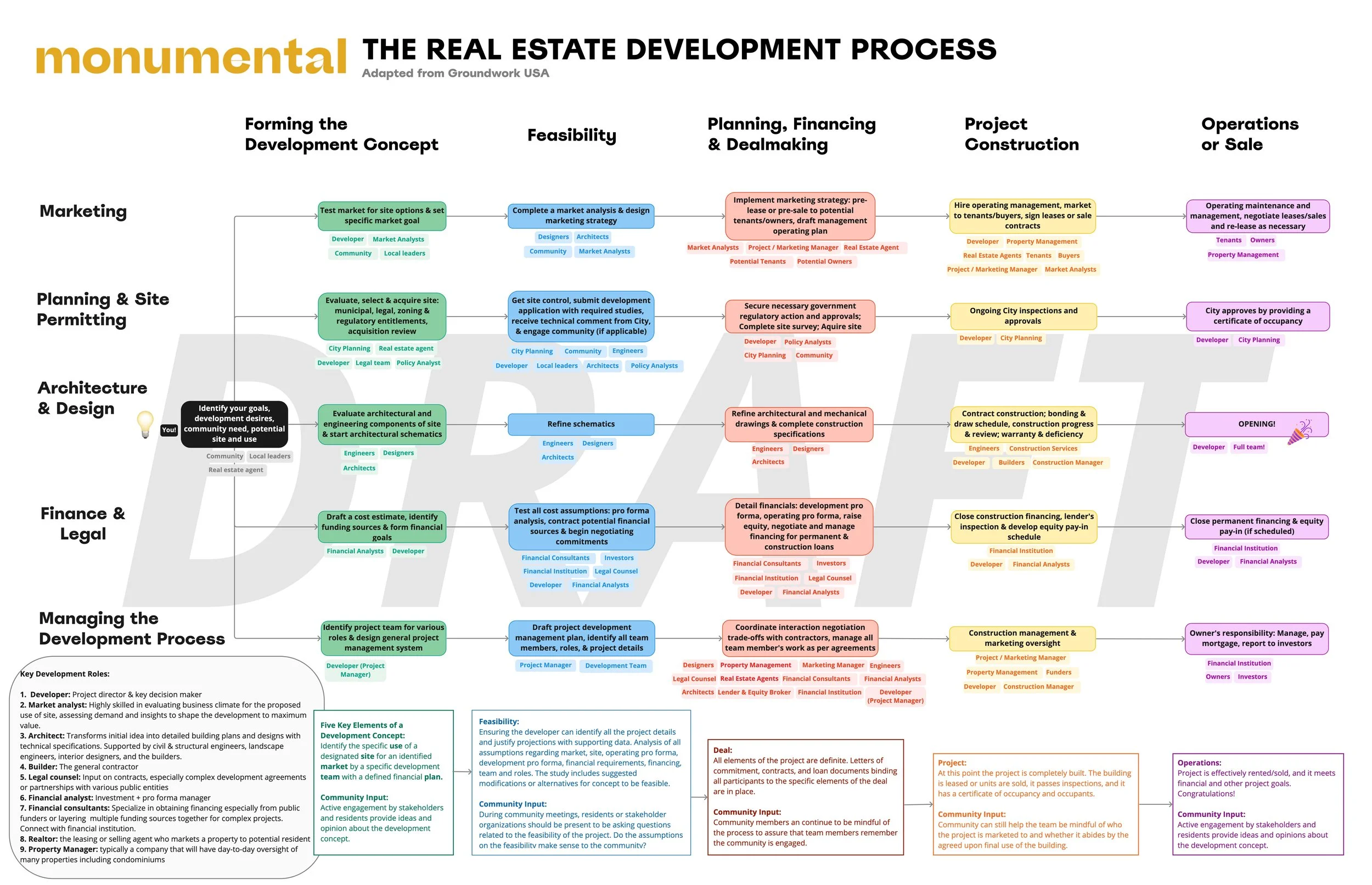
Real Estate Development Process Map for Monumental Projects (2022)
In the process diagram: Different stages of the development process covering stakeholder roles and expertise, key elements, and specific steps in the process
Project: FutureBuilds, the BIPOC real estate incubator program was developed in partnership with the School of Cities' Infrastructure Institute and engages BIPOC entrepreneurs and innovators who are passionate about solving issues of housing affordability and sustainability, thus building the foundation for a scalable approach to inclusive development.
Team Members: Alycia Shanika Doerign, Sneha Mandhan, advice from Zahra Ebrahim, Monumental Projects
My Role: In my previous role at Monumental, I researched social equity in the real estate sector and conducted a literature review to ground a real estate development incubator program for BIPOC entrepreneurs. I also designed this real estate development process map (right) as a tool to help program members understand the various stages and stakeholders in the development process within an Ontario-specific context.
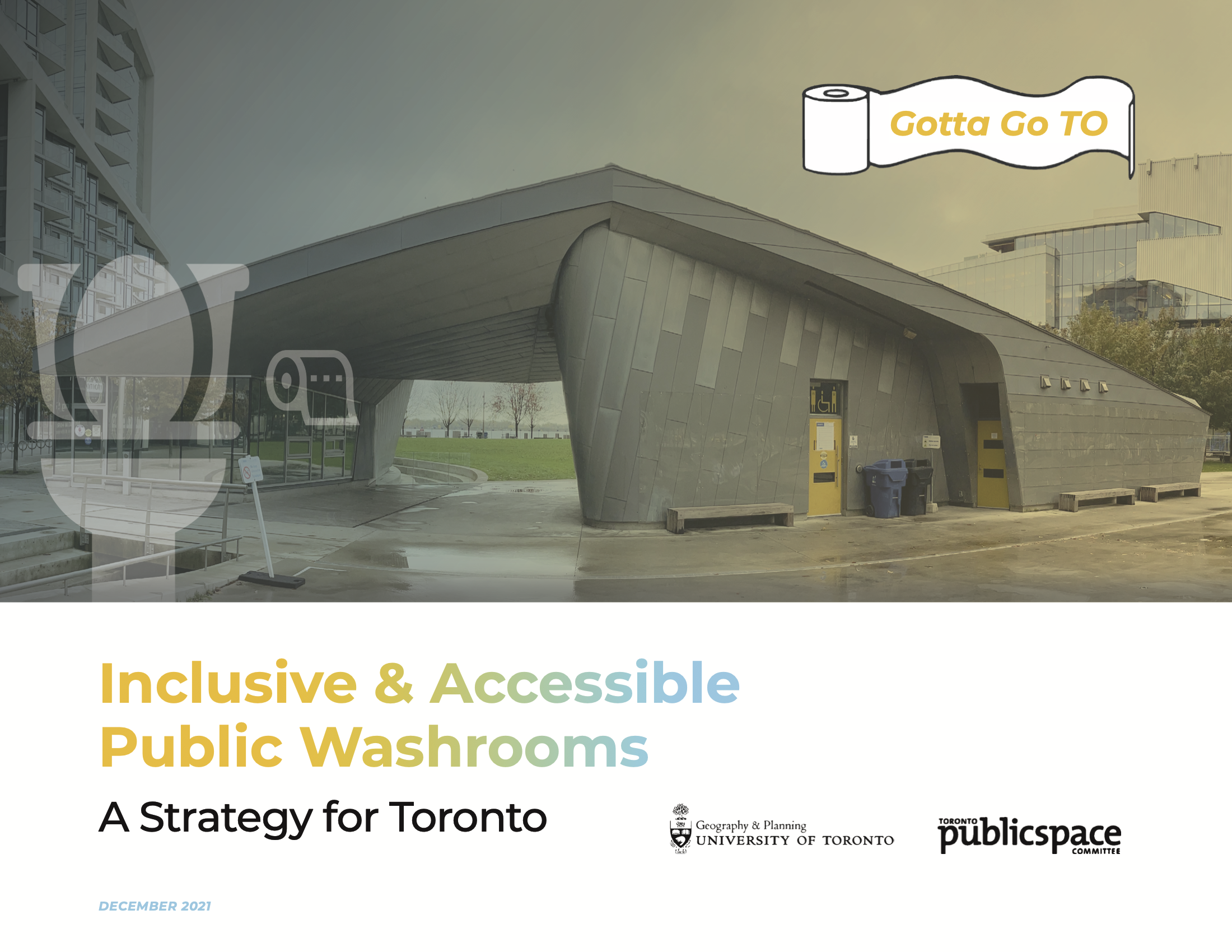
Inclusive & Accessible Public Washroom Strategy for Toronto (2021)
In this report: a background on public washrooms and their current state in Toronto; an overview of the political, social, policy, and planning contexts; a review of public washroom strategies; core considerations for public washroom provision; and recommendations. The report appendix includes a demonstration of a pilot project in Parkdale, an inventory of available funding mechanisms, & case studies of 3 advocacy campaigns.
Client: Toronto Public Space Committee; project brief prepared by Igor Samardzic & Cara Chellew (Steering Committee Representatives)
Team Members: Alycia (Shanika) Doering, Sawdah Ismail, Siobhan Kelly, Emily Power, Rameez Sadafal
Advised by: Erin Senior (Professional Advisor); Michelle Berquist & Tim Ross (Instructors, PLA1106 Workshop in Planning Practice)
My Roles: Research, stakeholder interviews, co-lead Parkdale case study site visits & analysis, developed policy, planning, and advocacy campaign recommendations & visions; data visualizations, image sourcing, report editing & complete design
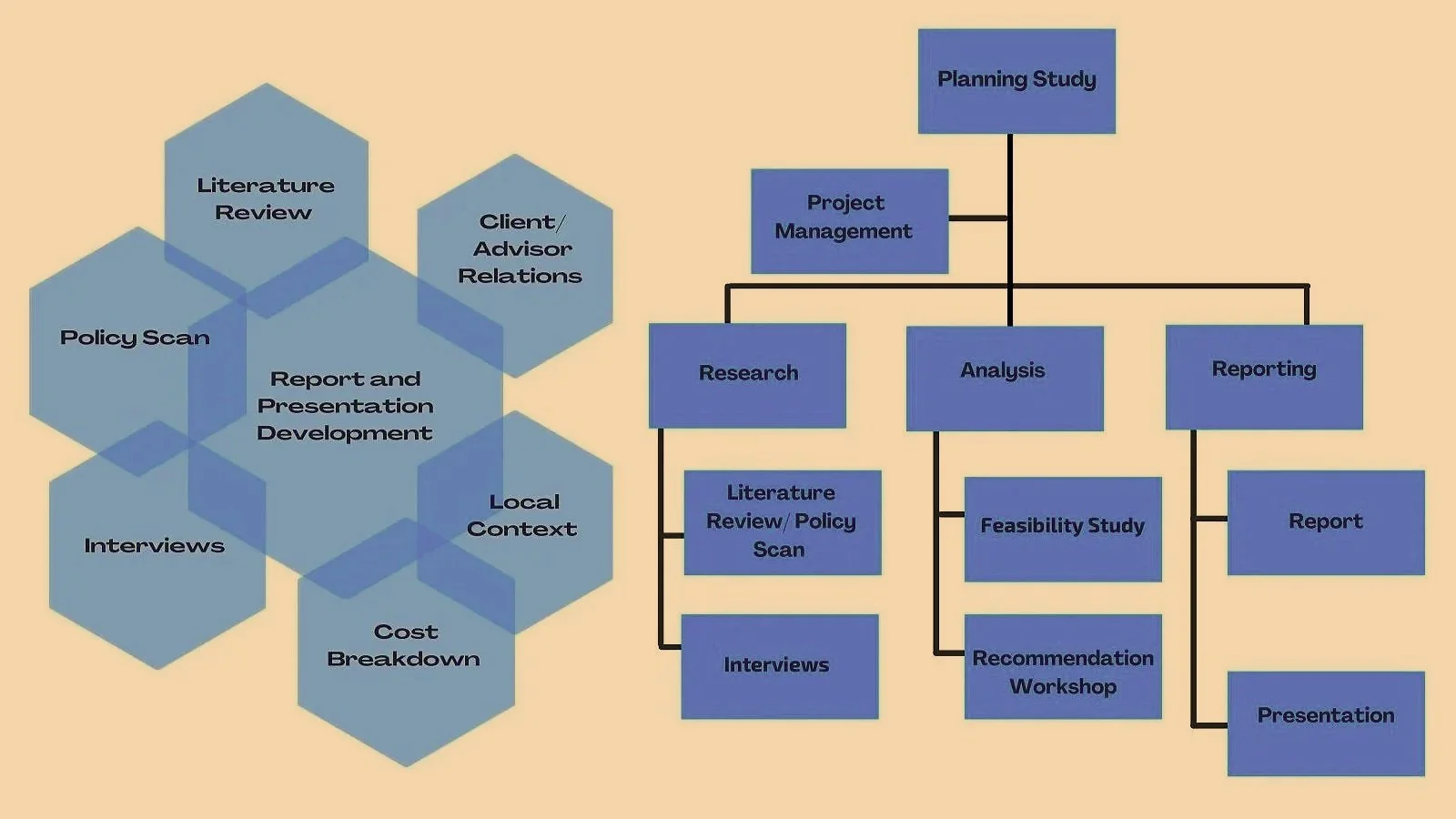
A standard Urban Planning Study Process
My experience in the urban planning industry spans across each of these elements
Big ideas, real impact.
My past projects demonstrate social-purpose planning projects where bold thinking meets thoughtful execution and real, impactful change.
Whatever you're building, we're here to help you take the first step with confidence. Let’s create something meaningful together.